• Skip to main content
Get a Free Estimate
Pay My Invoice
Menu
  • Home
  • Company
    • About Us
    • Testimonials
    • Certifications
    • Commercial Work
  • Materials
    • Live Full Slab Inventory
    • Live Remnant Inventory
    • Granite Countertops
    • Quartz Countertops
    • Marble Countertops
    • Quartzite Countertops
    • Soapstone Countertops
    • Dolomite Countertops
  • Resources
    • Slab Stories
    • Why Stone?
    • Know Your Stones
    • Stone Care
    • Careers
    • Blog
  • Projects Gallery
  • Contact
    • Cranberry Township
    • Solon
    • Cleveland
    • Pittsburgh
(440) 248-4915
Get a Free Estimate
Pay My Invoice

Countertops

Oct 21 2025

The Impact of Quartzite Thickness on Kitchen Ergonomics

Hundreds of little design choices go into making a functional kitchen. Just ask Julia Child, whose famous kitchen has been preserved in the Smithsonian. 

Among the kitchen’s unique features are custom countertops, which are actually thicker than standard– which made chopping, mixing, and kitchen prep much easier and more comfortable for the 6’3” chef. Ergonomics, the science of efficiency in a working environment, is extremely important in the kitchen. 

A kitchen where you can’t move and work comfortably is a kitchen that’s deeply uncomfortable to use. And since kitchens are the heart of the home, it’s important to enjoy this space!

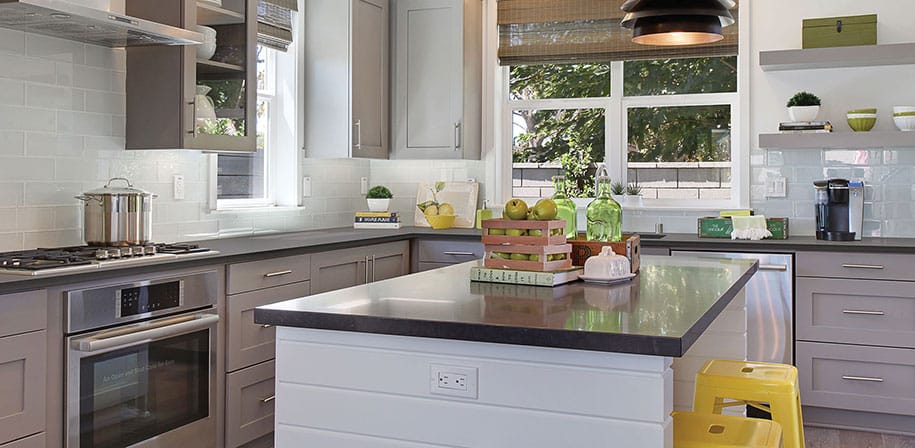
One of the ways you can improve your kitchen’s ergonomics is to rethink your countertops. Custom quartzite countertops create a tough, durable surface that’s heat resistant and easy to maintain– but there’s more to quartzite than just choosing the slab. Thickness is important, too!  Today, let’s take a look at how quartzite thickness can impact your kitchen’s ergonomics, and what factors go into the choice.

Standard Quartzite Thickness

Stone slabs, including quartzite, typically come in two standard thicknesses: 2 cm and 3 cm. The 2 cm option is lighter and often requires added support, such as a plywood subtop, while the 3 cm slab provides sturdier strength on its own. Both options are widely available, and each has different implications for how your kitchen feels and functions.

Countertop thickness plays a direct role in how tall your counters are. In kitchens designed for average heights, a 3 cm quartzite slab can add just enough height to improve comfort for taller users. For shorter homeowners, a 2 cm slab may keep prep spaces within easier reach. Over time, those small differences matter. Repeatedly bending, stretching, or standing in awkward positions can take a toll, and selecting the right slab thickness helps reduce that strain.

The Relationship Between Thickness And Style

Beyond function, thickness changes the overall look of your kitchen. A 3 cm slab has a bold, substantial presence that pairs well with modern cabinetry and open layouts. A 2 cm slab offers a lighter, more delicate profile that can make smaller kitchens feel open and airy. The style you prefer should work with how you plan to use the space day after day. A thick slab may create a feeling of strength and permanence, while thinner options highlight elegance and subtlety.

Edge profiles are another area where thickness makes an impact. A thicker slab allows for more elaborate edge treatments, which can change both appearance and comfort. Rounded edges can feel easier on wrists and elbows when leaning against the counter, while sharper profiles offer crisp lines for a contemporary look. Choosing an edge profile that matches your daily habits helps ensure your quartzite countertops are as comfortable as they are beautiful.

Create A Kitchen That Works For You

Ultimately, the best thickness for your quartzite countertops depends on the way you live and work in your kitchen. Families who spend hours preparing meals might appreciate the durability and ergonomic advantages of a 3 cm slab. 

Homeowners who want a lighter look for a smaller space may prefer the flexibility of a 2 cm option. Because kitchens are deeply personal spaces, matching thickness to lifestyle ensures that your countertops support daily routines rather than getting in the way.

The right choices in the kitchen are important. If you’re building new or renovating your own home, you deserve a space that works for you. And if you’re planning on selling? Over half (55%) of home buyers say that a good kitchen would convince them to buy a home that they otherwise would not.  

To learn more about quartzite thickness options and discover which works best for your home, get in touch with Granex today for a free quote.

Written by Stephen Alberts · Categorized: Countertops

Sep 22 2025

Granite Countertops and Lighting: How Natural and Artificial Light Affect Color and Texture

Granite countertops are celebrated for their durability and timeless beauty, and their appearance is far from static. The way a granite slab looks in a showroom can be surprisingly different from how it appears in your own kitchen, and lighting plays a big role in that shift. 

Both natural and artificial light affect how the colors, patterns, and textures in granite come to life, which is why understanding this relationship is essential when selecting the right slab for your home.

The Influence Of Natural Light

Natural light can highlight the depth and vibrancy of granite in ways that artificial light cannot fully replicate. Sunlight reveals subtle mineral details, making flecks of quartz sparkle and enhancing the stone’s tonal variations. 

The direction and intensity of natural light throughout the day can change the overall mood of the countertop; morning light might make it look brighter and cooler, while late-afternoon sun can warm up the tones. For kitchens with large windows or skylights, it’s worth considering how the stone’s appearance will shift with the changing light, as this can significantly impact the overall feel of the space.

white granite countertops

Artificial Lighting And Its Effects

Artificial lighting offers control and consistency, but it also influences granite differently depending on the type of bulb and fixture placement. Warm lighting, such as that from incandescent or certain LED bulbs, can bring out richer, golden undertones in the stone. 

Cooler lighting, often from daylight-spectrum LEDs, can emphasize gray or blue tones. Task lighting under cabinets can make granite appear more textured by casting shadows across the surface, while overhead lighting tends to soften the look. Because different areas of a kitchen may be lit in different ways, granite can take on multiple personalities within the same space.

Why Seeing Granite In The Showroom Matters

Showrooms provide the opportunity to see granite slabs in their full size, allowing you to take in the entire pattern and color variations at once. 

This is important because small samples cannot fully capture the scale of veining or the interplay of minerals across a larger surface. Under the bright, even lighting of a showroom, you can spot details that might be harder to see elsewhere, helping you decide if a stone’s character aligns with your vision for the kitchen. 

However, showroom lighting is rarely identical to your home’s lighting, which is why this step should be paired with viewing the stone in your own space.

The Value Of Viewing Granite In Your Home

Granite’s appearance can shift dramatically once it’s in your home’s unique lighting environment. Wall colors, flooring, cabinetry, and the quality of light in your kitchen all affect how the stone is perceived. 

Bringing a sample or arranging for a portion of the slab to be viewed on-site allows you to see how it reacts to both daylight and your specific artificial lighting. This step can prevent surprises after installation, ensuring the granite looks just as you imagined once it becomes part of the room.

Bringing Beauty And Light Together

Granite countertops are an investment in both function and style, and understanding how lighting affects them ensures that investment pays off in everyday enjoyment. By viewing the stone under showroom lights and in your own home, you can choose a slab that will shine in every setting. 

At Granex, we can help you find granite that looks stunning under any light. Ready to see how the right stone and lighting can transform your kitchen? Contact us today for a free quote for your countertop project!

Written by Stephen Alberts · Categorized: Countertops

Sep 10 2025

Behind the Scenes: How Fabricators Template Quartz Countertops for a Perfect Fit

Quartz countertops are known for their beauty, strength, and low maintenance, but achieving that flawless final look requires more than simply cutting a slab to size. Behind the scenes, fabricators rely on a precise process called templating to ensure that every countertop fits perfectly into your space. 

From advanced measuring to digital rendering, each step is designed to account for every wall angle, appliance placement, and design detail so the finished installation looks and functions exactly as intended.

The First Step: On-Site Measurements

The templating process begins at the project site, where trained technicians take detailed measurements of the space. Modern templating uses advanced digital tools to capture exact dimensions rather than relying solely on manual methods. 

This technology records the shape of the walls, cabinetry, and any cutouts needed for sinks or cooktops. By mapping every feature, these measurements help prevent gaps or misalignments during installation. The result is a highly accurate template that reflects the unique conditions of the home.

Creating A Digital Template

Once the measurements are complete, the data is brought back to the fabrication shop. Here, slabsmiths digitize the templates and overlay them onto the selected quartz slab. This process allows the team to plan the placement of each section, taking into account the direction of  veining, color variations, and any special features in the stone. 

Digital templating software can also generate a detailed rendering of the finished product, giving both the fabrication team and the homeowner a clear preview before cutting begins. This step ensures the final installation matches the design vision while minimizing waste and maximizing the stone’s natural beauty.

Templating also allows fabricators to position and size cutouts for sinks, cooktops, and faucets with complete accuracy. Because quartz is fabricated off-site, every hole, curve, and edge must be planned in advance. 

Edge profiles, whether simple and modern or more decorative, are incorporated into the design at this stage. This careful preparation ensures that when the countertops arrive for installation, every element, from the shape of the sink cutout to the depth of an overhang, has already been accounted for.

From Template To Fabrication

With the digital rendering approved, the fabrication team begins cutting the quartz slab using precision equipment. The pre-planned template serves as the exact guide, ensuring each piece is cut to fit its intended space without adjustments on-site. This method produces a better fit and protects the integrity of the quartz by reducing the need for extra handling or modifications after fabrication.

No kitchen or bathroom is perfectly square or level, which is why templating is so important. The digital template accounts for any irregularities that might affect the fit of the countertop. For example, if a wall bows slightly or an angle is off by even a fraction of an inch, the template will capture this detail so the countertop can be fabricated to match. 

These adjustments mean that once the quartz slab is cut, it will align precisely with the existing structures, eliminating the need for major modifications during installation.

Delivering The Perfect Fit

The final step is installation, where the pieces come together exactly as planned. Because the measurements and digital layout were so precise, the quartz slides into place with a clean, accurate fit. Edges meet perfectly, seams are minimized, and cutouts align exactly where they should. 

The result is a countertop that looks and functions exactly as envisioned, reflecting the care and precision that went into every stage of the process.

Expert Templating For Lasting Results

At Granex, our process combines advanced on-site measurements with expert digital planning to ensure your quartz countertops fit beautifully and function flawlessly. 

Our technicians use state-of-the-art tools to capture every detail, so that our countertops are precisely fabricated and installed every time. Contact us today for a free quote and see how our process brings your home to life!

Written by Stephen Alberts · Categorized: Countertops

Aug 10 2025

Don’t Like Chips, Scratches And Imperfections on Your Counters? What Stones Last For A Lifetime

Does your countertop look like something’s been nibbling at the edges? Tired of unsightly scratches from that time you missed the cutting board? Have spills created mysterious stains that just won’t come out, no matter how hard you scrub? It’s probably time for a countertop upgrade. But don’t leave yourself shaking your head and thinking “Ugh, again!” Instead, it’s time to pick a countertop that will last for life. And that means it’s time for natural stone.

Natural stone countertops are extremely durable and don’t have the cold, industrial look of stainless steel. They’re the best way to bring both warmth and strength into your kitchen or bathroom. But not all stone countertops are equally durable; some stones need more care than others and may be prone to scratching. Let’s find out what countertop stones are the most durable and will hold up to a lifetime of use.

Granite

white granite countertops

Granite is often considered the gold standard for countertops. It’s the most popular stone option, and for good reason. This igneous rock is formed under intense heat and pressure, which gives it a natural resistance to scratching, chipping, and cracking. With proper sealing, granite also resists staining from oils, wines, and acidic foods, making it a smart option for busy kitchens. 

Plus, it comes in a wide variety of colors and patterns, ranging from speckled neutrals to dramatic veining. Whether you’re designing a rustic space or a modern kitchen, granite offers options that fit the mood while keeping maintenance to a minimum.

Quartzite

Quartzite is even tougher than granite, but that’s not the only trick up this stone’s sleeve. In addition to being incredibly durable, this stone can mimic the look of marble– the least durable countertop stone. That means you can enjoy elegant white veining and light backgrounds without worrying about constant upkeep. 

Quartzite handles heat, scratches, and pressure with ease, making it a favorite for those who want style without sacrificing durability. Just like granite, quartzite benefits from periodic sealing to prevent stains, but otherwise, it’s a low-maintenance option that adds natural luxury to your home.

Soapstone

Soapstone is a bit more uncommon than granite or quartzite, but this dense material is gaining in popularity. While it is softer than granite, if a granite countertop chips, you have to have it professionally repaired. But soapstone’s scratches can easily be sanded out by the homeowner. 

With a swipe of mineral oil to blend the edges, the countertop is as good as new. Additionally, soapstone develops a beautiful patina and character over the years; a soapstone countertop will mature with your home. And it’s non-porous, so you don’t need to worry about sealing it! 

Quartz

Quartz isn’t a natural stone; instead, it’s about 90% powdered natural quartz mixed with binders and resin to create a surface that’s extremely tough and more lightweight than other types of countertop stones. 

One of the biggest benefits of quartz is its consistency; because it’s engineered, you won’t have to hunt through slabs to find a match. It’s non-porous, which means spills won’t seep into the surface, and it resists scratching better than many natural stones. Quartz is available in a huge range of colors and patterns, including some that look very much like marble or granite, so it’s easy to match your countertop with your design goals.

Stone Surfaces that Last

Whether you go with a familiar option like quartz or granite, or want to give soapstone or quartzite a try, you deserve a countertop that will be easy to maintain and extremely difficult to damage. And to get your countertop project started on the right foot, you need to choose a fabricator that handles everything from design to installation. 

Professional installation means that your countertops are cut and placed precisely, which extends thei