• Skip to main content
Get a Free Estimate
Pay My Invoice
Menu
  • Home
  • Company
    • About Us
    • Testimonials
    • Certifications
    • Commercial Work
  • Materials
    • Live Full Slab Inventory
    • Live Remnant Inventory
    • Granite Countertops
    • Quartz Countertops
    • Marble Countertops
    • Quartzite Countertops
    • Soapstone Countertops
    • Dolomite Countertops
  • Resources
    • Slab Stories
    • Why Stone?
    • Know Your Stones
    • Stone Care
    • Careers
    • Blog
  • Projects Gallery
  • Contact
    • Cranberry Township
    • Solon
    • Cleveland
    • Pittsburgh
(440) 248-4915
Get a Free Estimate
Pay My Invoice

Countertops

Feb 23 2026

Affordable Countertops in Solon and Nearby Cities: What “Affordable” Should Mean in 2026

If you’re upgrading a kitchen in Solon, Aurora, Twinsburg, Hudson, Beachwood, or the surrounding Northeast Ohio area, “affordable countertops” should not mean rushing into the cheapest surface you can find. It should mean spending smart: choosing a material that fits how you cook, selecting a layout that limits waste, and working with a shop that can keep the project moving from slab selection to installation.

Granex Industries is based right in Solon, which makes it easier to schedule in-person slab viewing, templating, and installation without long lead times or handoffs.

Best Budget-Friendly Countertop Materials for Northeast Ohio Kitchens

The best value material is usually the one that fits your day-to-day habits. Here are the most common “affordable but solid” options Granex customers consider.

Quartz countertops
Quartz is popular because it’s consistent, non-porous, and easy to keep clean. If you want a simple routine and predictable looks across long kitchen runs, quartz is often a strong value choice. Granex outlines the pros and cons in their material comparisons. Start here: Quartz Countertops

Granite countertops
Granite remains a go-to for homeowners who want natural stone variation and strong heat resistance for everyday cooking. In many kitchens, a well-chosen granite color can also hide crumbs and smudges better than ultra-solid colors. Explore options: Granite Countertops

Quartzite, dolomite, soapstone, and marble
These can work for the right project, but “affordable” depends heavily on availability, layout, and how much fabrication is required. Granex summarizes differences across stone types on their education pages. Good overview: Best Countertop Stone Types

Pro tip: If you are choosing between granite and quartz for value, make the decision based on your kitchen habits first. Quartz is great for low-maintenance routines. Granite is great for cooks who regularly deal with hot cookware.

The Biggest “Hidden” Cost Drivers (and How to Control Them)

Most countertop budgets swing based on design choices, not just material.

Edge detail
More complex edge profiles take more shop time. If you want to keep costs in check, consider a simple eased edge and invest your budget into a stronger slab selection or better sink accessories.

Seams and layout
Seams are normal in many kitchens, but the way they’re planned impacts waste. Better planning can reduce extra material usage.

Cutouts and specialty features
Farmhouse sinks, extra faucet holes, pop-up outlets, and waterfall panels can all add labor. None are “bad,” but they should be chosen intentionally.

Pro tip: Before you fall in love with a slab, share a quick sketch or photo of your kitchen layout with your fabricator. A shop can often point out where the design is creating avoidable waste.

How Remnants Can Make a High-End Look More Affordable

If your project is a smaller kitchen, an island top, a laundry room, a bar, or a bathroom vanity, remnants can be one of the best ways to stretch your budget. Granex publishes countertop guidance that highlights when remnants make sense for smaller projects.

Granex makes it easy to browse what’s available locally:

  • Countertop Inventory
  • Remnants

Pro tip: If you’re doing a kitchen upgrade with a tight budget, consider using a full slab for the main perimeter counters and a remnant for a smaller area like a coffee station or pantry landing zone. It keeps the kitchen cohesive while saving material where it won’t be as noticeable.

Practical Pro Tips for Affordable Countertops That Still Look Custom

1) Choose a finish that fits real life
Very dark, solid colors can show dust and fingerprints more easily. If you want “low effort” daily upkeep, look at patterns with mild movement or mid-tone colors.

2) Match your sink plan to your timeline
Sink changes can trigger rework if decisions happen late. Pick your sink and faucet early enough that cutouts are made once, correctly.

3) Do not skip templating and cabinet readiness
Affordable countertops become expensive when cabinets are not level or secured. Make sure base cabinets are installed and stable before measurements are taken.

4) Think like an installer when you plan your backsplash
If you are replacing counters but keeping an existing tile backsplash, confirm how the countertop will meet that tile. Sometimes a small design change avoids wall repairs.

Pro tip: If you are upgrading for resale in Solon or nearby suburbs, prioritize a clean, timeless edge and a slab that complements cabinet color. Buyers notice fit and finish more than specialty features.

Ready to Compare Affordable Countertops in Solon, OH?

Affordable does not have to mean basic. With the right material, smart layout planning, and a local team that fabricates and installs with a clear process, you can upgrade your kitchen without paying for avoidable mistakes.

If you’re in Solon or nearby Northeast Ohio cities and want help narrowing down the best countertop options for your budget and layout, contact Granex and schedule a visit to view slabs in person.

Get started here: Contact Granex Industries or explore more ideas on the Slab Stories Blog.

Written by Stephen Alberts · Categorized: Countertops

Dec 11 2025

When a Waterfall Countertop Makes Sense and How It Impacts Your Home Value

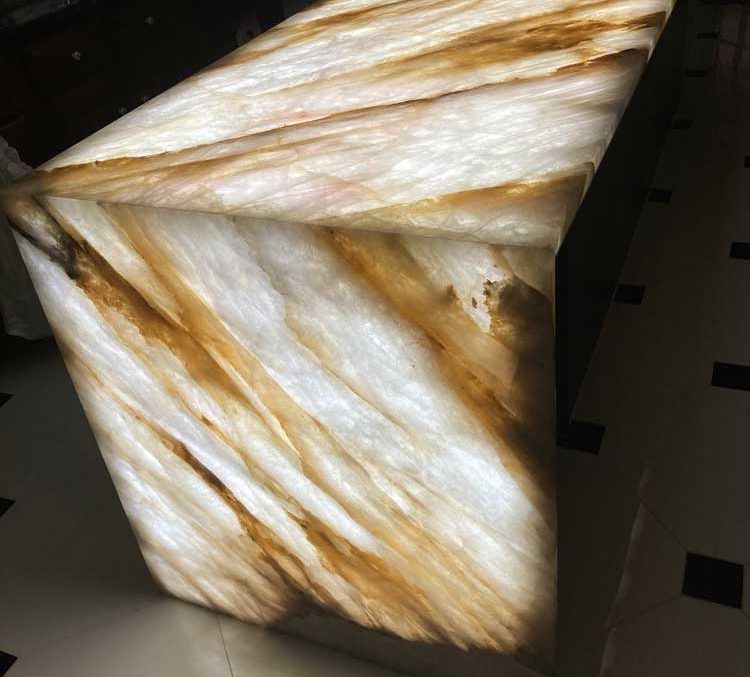
Waterfall countertops are among the most requested premium upgrades for modern kitchens. The style draws attention immediately because the stone surface flows vertically down the cabinetry side, creating a continuous visual finish. For homeowners in Solon, Chagrin Falls, Hudson, and surrounding Northeast Ohio communities, waterfall edges are now common on islands, wet bars, and entertainment spaces.

Here is when waterfall countertop installation makes sense and how it can support long-term home value.

When Waterfall Countertops Are the Right Choice

Waterfall installations fit best when:

The kitchen has an open layout

A waterfall slab creates an anchor surface visible from multiple angles.

The island has seating

That vertical slab gives structure to an eating space.

Cabinetry has upgraded finishes

Stones complement and elevate cabinets rather than covering imperfections.

You want a statement feature

Waterfall edges create the focal point in otherwise neutral kitchens.

Also, homeowners who like clean, uninterrupted surfaces appreciate waterfall edges because no trim components break the design.

How Waterfall Countertops Influence Resale Value

Waterfall stone can increase appeal because buyers view the feature as:

  • Custom-built
  • High-quality
  • Contemporary
  • Durable

The additional slab area clearly shows investment beyond standard countertop runs.

Most appraisers do not assign a specific dollar increase solely due to waterfall installation. However, houses that feature waterfall islands tend to photograph better, perform strongly in listing showcases, and differentiate quickly in competitive markets.

In Northeast Ohio, where many renovations include open kitchen-to-living conversions, waterfall islands visually tie the spaces together.

Pricing Considerations for Waterfall Installations

Costs vary based on:

  • Stone chosen
  • Thickness
  • Number of vertical panels
  • Precision cutting and seam leveling
  • Location of cabinet legs and electrical outlets

Many homeowners assume the price increase is due to added slab quantity alone. The real cost impact is fabrication time — edges must align precisely, requiring accurate measurement and reinforced seam joints.

Projects requiring vein alignment (common with marble-pattern quartz or quartzite) take extra planning time. When matched correctly, the visual impact increases substantially.

Pro Tip: Ask if your fabricator provides layout diagrams before cutting slabs. That preview ensures vein flow direction is correct.

When Waterfall Countertops May Not Be Ideal

Certain situations limit design functionality:

  • Tight walk-around spacing at island corners
  • Heavy bar seating with exposed stool legs
  • Cabinet faces requiring operational access

Waterfall legs restrict access to side cabinet doors or exposed storage. Homeowners should plan appliance placement and walkway width ahead of installation.

Walkways ideally remain around 42″ or more for comfortable traffic flow.

Where Waterfall Countertops Look Best

Beyond kitchens, the feature works well in:

Basement bars

Adds upscale finish to entertainment spaces.

Laundry room islands

Useful when folding spaces need protection.

Outdoor kitchens

Creates strong design direction in covered areas.

Office built-ins

Helps define workspaces visually.

Sintered stone and granite are often used outdoors, while quartz and quartzite dominate most indoor installations.

Ready to Begin Planning a Waterfall Countertop Installation?

Waterfall countertops transform a standard island into an architectural focal point. When positioned correctly, the upgrade adds value through design presence, elevated material, and a dramatic finish.

Granex provides fabrication accuracy, slab matching, and installation built around regional needs, helping homeowners achieve the look that fits both style and home layout.

Contact the Granex team today to schedule measurement, review slab options, or begin design planning for your waterfall installation. Entire spaces change when one surface becomes a centerpiece.

Written by Stephen Alberts · Categorized: Countertops

Dec 02 2025

Countertop Remnants vs Full Slabs: How Much You Actually Save in Northeast Ohio

Countertop remnants are a practical way for Northeast Ohio homeowners to complete small projects without investing in full slabs. For many households in Solon, Hudson, Aurora, Twinsburg, and surrounding communities, remnants provide access to premium materials without the cost associated with full-size slab purchases. The key is knowing when remnants make sense and when larger slab investment is worth it.

Below is a clear comparison of cost, usage, and suitability so homeowners can evaluate both options confidently.

What Countertop Remnants Actually Are

Remnants are leftover stone pieces that remain after a full kitchen or commercial fabrication job is complete. These pieces vary in size, sometimes large enough for a vanity, sometimes small enough for shelving or accent areas.

Common remnant sizes include:

  • 24″–60″ widths
  • Partial island sections
  • Large vanity-depth pieces
  • Odd-shaped edge cuts that can be squared

Because remnants originate from full-scale projects, the material is often premium grade stone that would otherwise cost significantly more at full slab size.

Pro Tip: Always bring measurements when shopping remnants. Premium remnants sell quickly when they fit standard vanity sizes.

best countertops in cleveland

When Remnants Make Financial Sense

Remnants save homeowners money when the surface area is small enough not to require a full slab. If you only need a small piece, buying an entire slab plus fabrication labor would be unnecessary.

Best uses for remnants include:

Bathroom Vanities

Most vanities fall between 36″–72″, which is common remnant range.

Laundry and Mudroom Counters

Remnants help improve functional utility without large investment.

Basement Bars

Smaller run lengths often fit a single remnant piece.

Outdoor Grilling Areas

Short segments between grill cabinets often need only one section.

Built-In Desk Areas

Common in home offices and bonus rooms.

When sized correctly, remnant pricing typically includes:

  • Fabrication
  • Edge finishing
  • Installation labor

Since slab purchasing is avoided, cost drops significantly.

When Full Slabs Still Matter

Full slabs remain ideal for:

  • Kitchens with long countertop runs
  • Multi-zone layouts
  • Large center islands
  • Waterfall features
  • Bookmatched slab applications

Homeowners often underestimate how seams affect final appearance. For kitchens where design consistency matters, full slabs prevent visual breaks.

Full slabs also support projects where detailed edging or deeper overhangs are planned, because fabricators have extra surface material to work with.

How Much Money Homeowners Can Actually Save

Savings vary based on project size and stone type, but typical ranges include:

  • Single-vanity projects often cost 50–70% less with remnants
  • Small laundry counters reduce cost by 40–60%
  • Fireplace mantels or shelves reduce cost by 60%+

Savings occur because:

  1. Material cost is dramatically lower
  2. Shipping cost is eliminated
  3. Remnants often require fewer fabrication cuts

However, pricing still depends on edge style, cutout needs, and installation complexity.

Pro Tip: If you need more than one stone surface and are not concerned about matching, combine two remnants. Often a high-grade remnant plus a standard remnant is still less than one slab-based install.

How to Shop Remnants Effectively

To maximize value:

  • Have measurements ready
  • Know sink sizes in advance
  • Be open to multiple colors
  • Ask if polishing or edge upgrades cost extra
  • Inspect corners for square alignment

Fabricators typically sort remnants by material tier — meaning you may access high-tier stone at significantly lower cost.

Granex keeps remnant options rotating consistently due to ongoing fabrication volume.

Ready to Explore Remnant Inventory?

Countertop remnants give homeowners a smart way to upgrade smaller spaces while still accessing premium stone selections. For larger projects, full slabs remain the best choice — but remnants open the door to high-value upgrades at lower pricing.

Contact Granex today to request remnant availability, receive measurements guidance, or schedule fabrication for your project. Accessing quality stone is easier when you start with materials already on hand.

Written by Stephen Alberts · Categorized: Countertops

Nov 10 2025

Using Granite Countertops to Anchor Kitchen Islands with Unique Shapes

Kitchen islands have become the centerpiece of modern homes, offering a balance between function and style. When designed with unique shapes, they can redefine how a kitchen looks and flows. 

Granite countertops play a vital role in anchoring these designs, giving custom island layouts a sense of permanence and purpose. The strength, weight, and visual depth of granite transform bold island configurations into timeless focal points that connect the entire kitchen.

The Power Of Shape And Material

Unconventional island shapes, like curved or L-shaped designs, require materials that emphasize form without sacrificing durability. Granite excels in this role, offering a natural solidity that keeps unusual silhouettes grounded. The organic veining and natural variations within granite make each island surface distinct, enhancing the artistry of the design while maintaining practicality. A sweeping arc of granite across an island creates fluidity, while angular slabs can emphasize precision and strength.

Granite’s natural composition also complements custom cabinetry or architectural features. A waterfall edge or cantilevered extension becomes an intentional design statement when crafted from granite, as the material’s density and durability ensure long-term stability. Whether the island serves as a prep area, breakfast bar, or centerpiece for entertaining, granite provides both the surface strength and visual balance needed to unify complex shapes.

Enhancing Functionality Through Design

While shape defines visual impact, functionality defines everyday satisfaction. Granite’s resilience allows designers to explore ambitious island layouts without compromising performance. Large or irregularly shaped slabs can handle daily activity, from chopping and baking to hosting guests. Its heat resistance supports the integration of cooktops or warming elements, while its dense structure resists scratches and wear. This makes it ideal for multi-purpose islands that serve both culinary and social functions.

Color selection and finish play an equally important role. Lighter granite tones, such as creamy whites or soft grays, amplify the sense of openness in sprawling island designs, while deep blacks or blues bring dramatic contrast to more compact spaces. 

Polished finishes enhance brightness and reflect light throughout the room, while honed textures create a more grounded, tactile effect that highlights the island’s form. The right pairing reinforces the unique geometry of the island, giving it a sculptural presence that commands attention.

Creating Visual Balance In Open Layouts

Open-concept kitchens benefit from islands that define space without dividing it. Granite excels at this balance, providing visual weight that anchors the room while still allowing surrounding design elements to shine. A uniquely shaped island topped with granite can establish flow between cooking, dining, and liv