
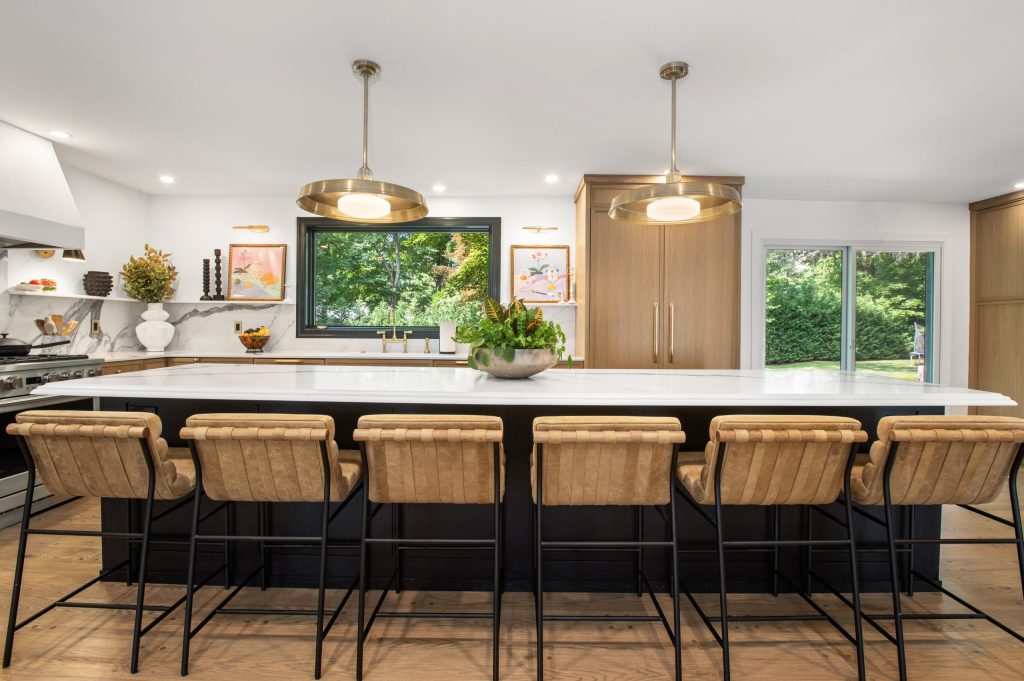
Stone is showing up in more places that see spills. In the 2026 U.S. Houzz Kitchen Trends Study, slab backsplashes made up 28% of backsplashes in renovated kitchens, up from 24% the year before. More stone behind the cooktop and sink means more contact with lemon juice, tomato sauce, wine, and vinegar.
Some stones shrug that off. Others react and lose their finish. Knowing which group a slab belongs to before it is cut is one of the most useful things you can learn in our Solon showroom.
What Makes a Stone Acid-Sensitive
The Natural Stone Institute sorts natural stone into two groups. Calcareous stone is made mostly of calcium carbonate, which reacts with acids. Siliceous stone is made mostly of silicate minerals like quartz and feldspar, and the Institute notes it is generally resistant to most acids found in a kitchen.
When an acid sits on calcareous stone, it eats into the surface and leaves a dull spot called an etch. It looks like the polish was rubbed off, and it often feels slightly rough. It is not a stain, so a cleaner will not lift it.
The Stones That Etch: Marble and Dolomite
Marble countertops are calcite-based, so they etch from everyday acids. A splash of lemon juice left for a few minutes can mark a polished marble top.
Dolomite countertops are sometimes sold as hard marble. According to the Natural Stone Institute’s UseNaturalStone.org, dolomite etches more slowly than calcite. Slower is not never. Dolomite still belongs in the acid-sensitive group, and we treat it that way when we talk through layouts.
Pro Tip: A honed or leathered finish hides etching far better than a high polish, because there is less shine to lose. If you love marble on a busy prep counter, ask to see the same slab in a honed finish before you decide.
Your One-Stop Shop For Anything Countertop-Related
Wondering Which Acid-Sensitive Stones Belong in Your Kitchen? Talk to Our Solon Team Before You Pick a Slab.
Marble and dolomite etch. Granite, quartzite, and soapstone hold up to kitchen acids. Our Solon fabricators explain how to choose stone for how you cook
The Stones That Hold Up: Granite, Quartzite, and Soapstone
Granite and true quartzite are siliceous, so tomato sauce or a squeeze of lime will not etch them. That is a big reason granite has been a working-kitchen favorite for decades, and why quartzite countertops appeal to people who want a marble look with less worry.
Soapstone is its own case. It is made largely of talc, which UseNaturalStone.org describes as chemically inert, so soapstone is generally unaffected by acids. It does scratch more easily than granite, which some owners enjoy as part of its character.
Engineered quartz is a manufactured surface, not a natural stone. Follow the maker’s care guidance for your specific brand and color.
Pro Tip: Not every slab sold as quartzite is quartzite. Some “soft quartzites” behave like marble. The Natural Stone Institute’s own test is simple: put a few drops of lemon juice or vinegar on a sample for five to ten minutes, wipe it, and look at the surface at a low angle. A dull ring means the stone will etch. Ask for a sample of the stone you are considering and run the test at home before you commit.
How We Plan a Kitchen Around Acid-Sensitive Stones
Etching is not a reason to skip marble or dolomite. It is a reason to place them well. Here is how we approach it with homeowners and designers:
- Match the stone to the zone. Put acid-resistant granite or quartzite on the sink run and around the cooktop, and use marble on an island, bar top, or vanity that sees less acid.
- Choose the finish on purpose. Polished surfaces show etches the most. Honed and leathered finishes soften them.
- Know that sealing is a different job. UseNaturalStone.org points out that sealers do not protect a stone from reacting with acid. Sealers help with staining, not etching.
- Read cleaner labels. The Natural Stone Institute warns that some rust removers contain trace hydrofluoric acid, which attacks every stone, granite and quartzite included.
For day-to-day habits, our stone care guide covers what to use and what to avoid on each material.
Pick the Right Stone With Granex
For 20 years, Granex has helped Northeast Ohio homeowners, designers, and builders choose stone that fits the way they actually live. Visit our Solon showroom on Aurora Road, look at full slabs side by side, and talk with a team that has fabricated and installed every material on this list.
Ready to find the right fit for your kitchen or bath? Request your free estimate or call us at (440) 248-4915.